Ashleigh Ellis Natural Dye & Eco Art
  • Home
  • Gallery
    • Into The Leaves Exhibition 2022
    • Plant People Portraits: cyanotypes 2024/25
  • Blog
    • Solar Dyeing: A Simple Natural Dyeing Method
    • Basic Natural Dye Recipie
    • How to Grow Woad: The Blue Natural Dye Plant
    • Logwood/Ek - Uncovering a True Name
    • Yellow Flag Iris Ink & a View of Elwith
  • Contact
  • About
  • Thinking with Maple Fine Art Print Large
  • Online Course: Natural Dyes & Cyanotype
  • Home
  • Gallery
    • Into The Leaves Exhibition 2022
    • Plant People Portraits: cyanotypes 2024/25
  • Blog
    • Solar Dyeing: A Simple Natural Dyeing Method
    • Basic Natural Dye Recipie
    • How to Grow Woad: The Blue Natural Dye Plant
    • Logwood/Ek - Uncovering a True Name
    • Yellow Flag Iris Ink & a View of Elwith
  • Contact
  • About
  • Thinking with Maple Fine Art Print Large
  • Online Course: Natural Dyes & Cyanotype
Search by typing & pressing enter

YOUR CART

    The Basics of Natural Dyeing ~
    Creating a Dye Bath

    Picture
    Starting to natural dye is really simple, but it gets advanced pretty quickly! 
    This blog post gives you what you need to know when starting out.


    This is a simple natural dye method.
    Make sure to read ‘Choosing and Preparing your Textiles’ and ‘Safety & Tips’ at the bottom to decide what is the best textiles to choose and what plant material to start with


    To create a dye bath you need:

    • Chopping board and knife
    • Weighing scales
    • Your chosen plant material
    • Chosen textiles 
    • 2x pots (needs to fit textiles and allow movement)
    • Water (rain water if you can)
    • Utensil for stirring
    • Hot plate/hob
    • Tongs 
    • Sive
    *Optional: Temperature gauge/thermometer
    Picture
    Picture
    Picture
    Method:
    1. The ratio of plant material to textile is 1:1.   Weigh your plant materials, and weigh your textiles. They should be roughly the same.
    2. Soak your textile in water for at least 2x hours, overnight is good.
    3. Chop/break up your chosen plant material.
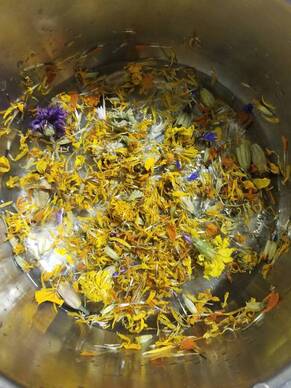
    4. Add plant material pot of water and simmer for 45-90 mins. Less for flowers, more for roots and woody parts like bark and cones.
    5. Carefully strain our plant material with the sive, saving the liquid as your dye bath.
    6. Cool the dye liquid to room temperature.
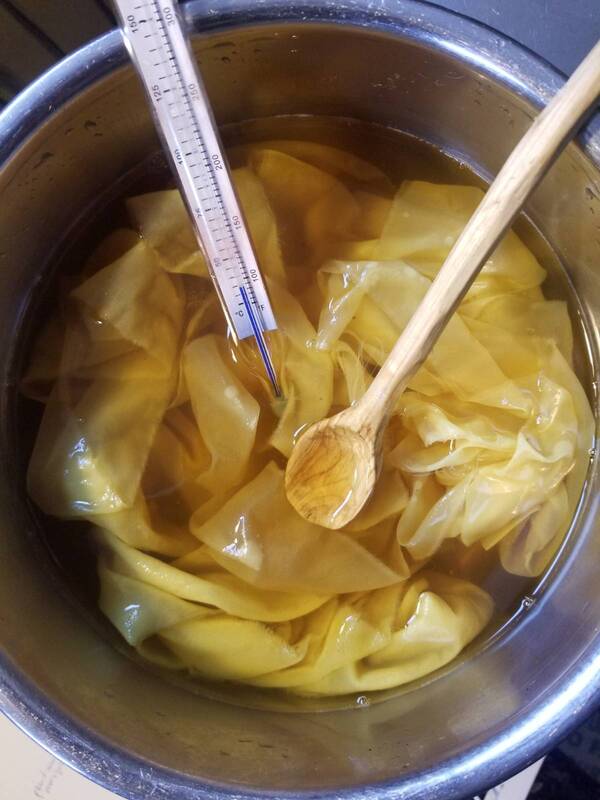
    7. Add your soaked textiles.
    8. Add water if needed to allow free movement of your textiles when stirred. 
    9. Option 1: leave for 2x days. Skip to 14.
    10. Option 2: Bring the water to a gentle simmer.
    11. Keep on this gentle heat for 30-60min.
    12.  Stir often to avoid air bubbles and make sure that the colour take up is even and not patchy (unless you want that). 
    13. You can leave it to cool over night for deeper penetration of the colour. 
    14. Rinse the textile until the water runs clear and then wash with ph neutral soap. 
    15. Hang to dry away from direct sunlight. 

    Really, it’s as simple as making soup! But it does take some time.
    Picture
    Picture
    Picture
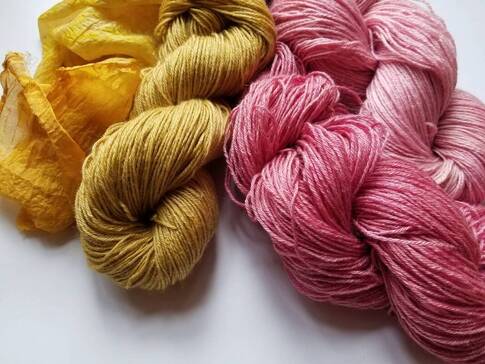
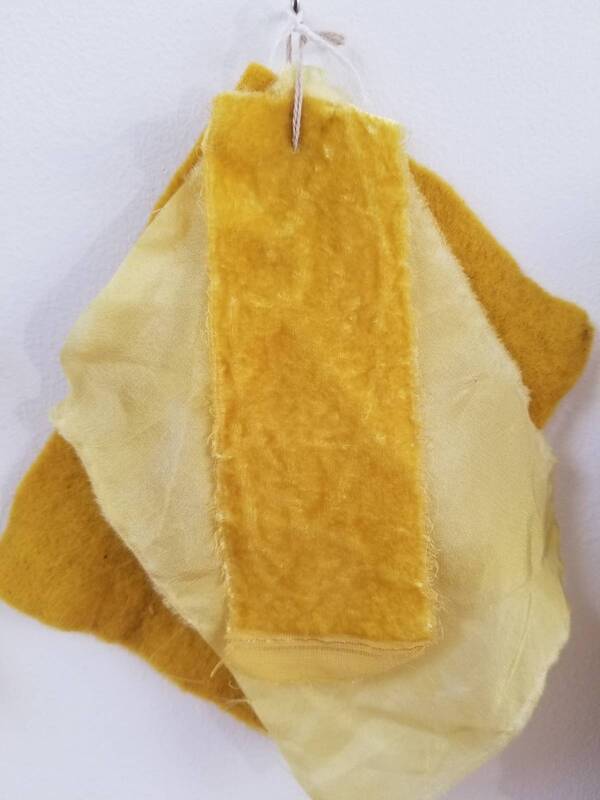
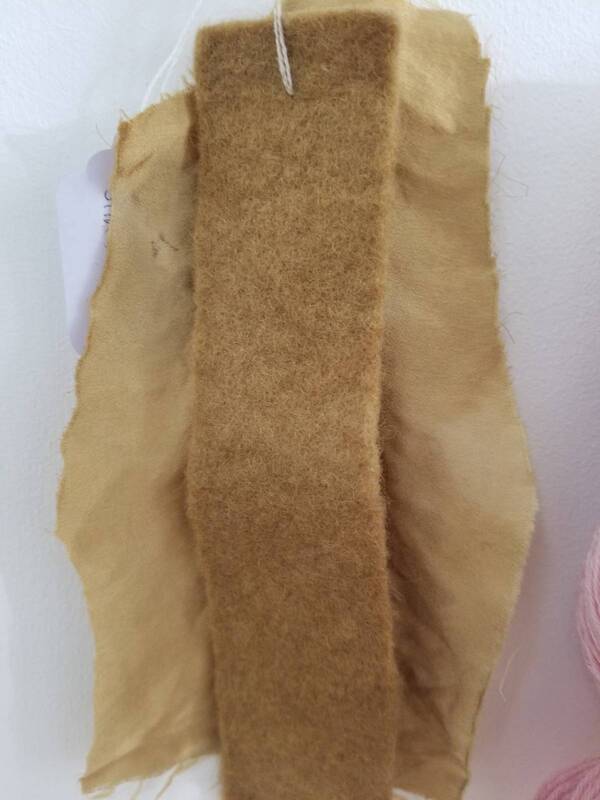
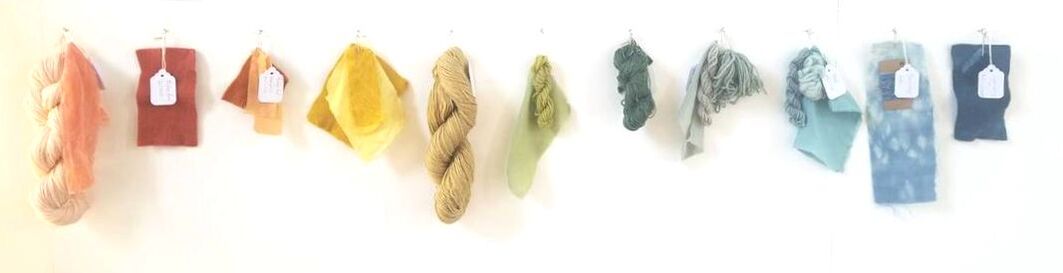
    From left to right, or first to last: Alder Cones on silk and wool, Marigolds on silk velvet, Marigolds on silk and wool. All dyed using this method.
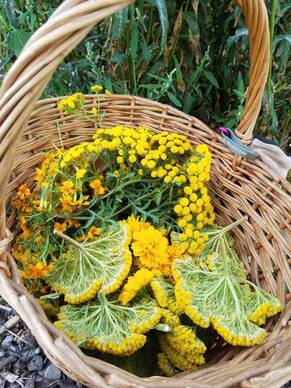
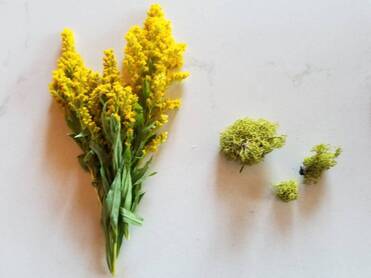
    There are many plants you can use for this basic technique, and I find it really fun to bring small amounts home after a walk to test it out. I keep small pieces of mordanted wool yarn or felt, or silk off cuts to throw in the pot.
    Picture

    What is mordanting you ask?

    Mordanting is an important step to prepping your textile so that the colour will 'stick'. We soak the textile in diluted mineral salts. This creates a chemical bond between the textile and the natural pigments - a metallic 'bridge which attracts them together.  Although not all dye plants need it, they will always give a deeper and richer colour with it, and be longer lasting.

    There are a few steps to preparing your fabric if you want to Be a Pro and make sure you have success. 😉


    Choosing and Preparing your Textiles:
    • Always use natural fibres! Wool and silk take natural dye exceptionally well. *  Although not a natural fiber, viscose and rayon also work. As they are a man-made fiber and take a lot of water and added chemistry to create, it is more environmentally friendly to find them secondhand!
     
    • Make sure the textile is washed really well, using as high a temperature as possible with washing soda or ph neutral soap. This is called scouring, and it helps the dye adhere to the fabric evenly. 
     
    • Mordanting your textile.
     

    Do you always have to mordant?
    Well, there are some dye plants which adhere to natural fibres without being mordanted and which can be found easily, such as:

    Turmeric
    Onion skins
    Avocado stones
    Alder cones
    Walnut husks

    Buddleja flowers


    Mordanting Hack for Cotton!
    There is a quick and accessible method for prepparing cotton using a surprising ingredient - Soya milk! Soya is not a mordant and it will allow the dye to rub off over time. This is because it does not form a chemical bond but instead creates a protein layer on the surface of the textile that is more attractive to the natural pigments. (You notice above I recommend wool and silk, both are protein fibers).  However you will still give satisfactory colour for a time.

     Simply soak the textiles overnight/8x hours, in a mixture of 5 parts water to 1 part Soya milk. Then rinse and dry. Repeat for longer lasting effects. 


    This hack is suitable for textiles that will not be washed or worn frequently, unless you are willing to re-dye again. Saying that, I have dyed tshirts with this method, and they are still going strong, 4x years later!! What colour will your favourite t shirt be next? I have mine dyed in a beautiful avocado stone dye...It is subtly changing colour over time and I Love that!

    If you’d like to learn the magic alchemy of natural dyes, including the mordanting process, the many dye plants and the colours of the rainbow, where to find them and how to grow them, I teach in-person workshops throughout the year (announced on my website and newsletter) and an online offering is currently in the making. I give mentorship to creative practitioners, and am developing a consultancy package for community groups wanting to grow their own natural dye garden. Do drop a line!
    Picture
    Picture
    Safety & Tips:

    Dedicate a pot to natural dyeing that is NOT used for food. 

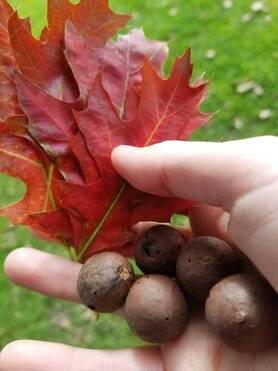
    Do a quick google search to identify your plant and learn all about it! It is really important to make sure it is not toxic. Not many things are, but it is always good to check. For example, I would NOT recommend Foxglove. Historically this has been used, but it is not at all good for your heart to inhale the steam when dyeing. 

    Besides from a ‘tea test’, solar dyeing can be a handy way of testing a colour from a plant - check out my blog post here: www.ashleighellis.ie/solar-dyeing-simple-method
    Picture

      If you'd like to join me on a journey exploring beautiful botanical colours for textiles and paper ~ I'd love to invite you to my newsletter where I send weekly inspiration, tips and know-how, all around developing an ecologically friendly creative practice. Unsubscribe at any time.

    Subscribe to Newsletter
    Picture

    Ashleigh Ellis

    Ashleigh Ellis is an eco social artist who has a natural dye practice. She teaches skills and know-how, and grows natural dye plants with communities, benefiting people, place, and pollinators.

The Magic of Natural Dyes and Cyanotype Printing
~ 2 online courses


Welcome to the beautiful world of Cyanotype printmaking on paper and fabric combined with plant pigments!
 These courses share the steps, recipes, and techniques you need to confidently create unique and colourful works of art in an environmentally conscious way. You will learn how to combine foraged plants and bought botanical pigments with the simple and low impact photographic process of cyanotype and come away bursting with ideas for your creative practice.


There is a world of natural colour at your fingertips waiting to be discovered!
​

Read on for more details about cyanotype and both courses…


​🌿The first course Wet Cyanotype 
(starting May 7th 2026)
focuses on getting you set up and making beautiful unique prints with plant forms on paper and fabric with the playful techniques of wet cyanotype, incorporating natural dyes. 


Link to Course:  appleoakfibreworks.com/collections/academy-short-courses/products/wet-cyanotype-printing-on-paper-7th-of-may-2026


​🌿The second course Cyanotype and Natural Dyes: on paper, fabric and other substrates 
(starting September 3rd 2026)
​takes a deep dive refining cyanotype printing techniques on paper, fabric and other substrates, how to print your own photographic images, and how to shift their colour and over-dye them with foraged plants and botanical pigments. 


(Link for sign up for this course coming soon)

Picture

What Is Cyanotype Printing?
  • Cyanotype is an elemental process of printing an image on paper and fabric. It works with the energy of the sun, water, an object or photographic negative, and UV sensitive iron salts to create stunning blue prints.
  • Cyanotype printing is the most environmentally friendly way of creating a long lasting analogue photographic image, and no camera or darkroom is needed.
  • Photographic negatives, natural forms, objects and textures can be printed onto a huge range of surfaces, making it a highly versatile and creative medium.​
  • Because of the nature of its chemistry, cyanotype combines beautifully with natural dyes - as if they were made for each other! The colours available from adding plant pigments are almost limitless.  Not every plant has been worked with to date, so it is really exciting to see what we will discover in this emerging medium.

​​But what is “wet” cyanotype? 
​
🌿Wet cyanotype is when we work quickly and directly with the emulsion before it dries and introduce additional ingredients—sometimes liquids, sometimes natural materials—in experimental and creative ways. These interventions create organic textures, breaking all the rules of traditional cyanotype and can shift the colour palette beyond the classic blue. 

🌿The Wet Cyanotype Printing course is unique in bringing together these techniques with the added magic of natural dyes. I’ll guide you through the foundations of cyanotype printing on paper and fabric and show you how to prepare and use natural dyes as an added wet ingredient to create richly detailed, one-of-a-kind botanical prints.

A love affair has begun...
About the courses ~

Live ‘create-together’ practical sessions are at the center of these courses, with plenty of time for sharing with each other and asking questions. The nature of this means you can still work at your own pace, but have that studio vibe and creative connection with your peers during the course that helps you get started and stay motivated. And the beauty of these courses being hosted by
The Natural Dyers and Growers Academy
​is that this creative flow and connection can be continued afterwards within the platform!
Picture

In Summary

Course 1 ~ Wet Cyanotype on paper and textiles ~ focuses on:

🌿printing on paper and textile
🌿working with plant forms
🌿using wet ingredients for effects, included natural dyes
🌿additional techniques for over painting 
🌿suitable for art prints and wearable
🌿great for beginners
​
Course Link: appleoakfibreworks.com/collections/academy-short-courses/products/wet-cyanotype-printing-on-paper-7th-of-may-2026


Course Opens May 4th
Live 1  Thursday 7th May 4 - 6pm ~ Setting Up Your Work Space & Preparing Materials
Live 2  Thursday 21st May 12 - 2pm ~ Wet Techniques, Create Together
Live 3   Thursday 28th May 12 - 2pm ~ Additional Techniques, Create Together
Live 4 Thursday 4th June 4 - 6pm - Wrap up and Share Together
Course Finishes May 14th. 

Course 2 ~ Cyanotype and Natural Dyes: on paper, fabric and other substrates ~ focuses on:

🌿printing on paper, textiles, and other surfaces
🌿working with plant forms and your own negatives for photographic prints
🌿prepping your paper and textiles for dyeing (mordanting)
🌿dyeing your prints with plant dyes - bought and foraged
🌿shifting the colour with additional techniques
🌿suitable for art prints and wearables
🌿for beginners, and experienced creatives wanting to develop their cyanotype practice

Course starts Sept 3rd 2026, Sign up link Coming Soon!

​​

What past students have to say~
​

This course was brilliant . I was glued my seat! It is very compelling when you realise what can be done. Everything was so clear, Thanks for a lovely , easy sweet entry to creative mayhem . ~ Helen L B (Wet Cyanotype course student 2025)

Ashleigh is an excellent teacher and facilitator in all things related to natural colour and cyanotype. I have had the pleasure attending her courses out in the field, in workshops and online. I would highly recommend Ashleigh’s courses, her passion and commitment to sharing her knowledge and skills is phenomenal and I always go away with beautiful pieces and so many ideas to try out at home afterwards. ~ Kathy K.


FAQ

  • These courses can be taken as stand alone courses, or taken one after another.
 
  • Do I have to be a photographer already to take this course? - No! You will need to be able to take photos on your phone, to download an app, and have access to a printer. 
 
  • Do I have to know textiles or natural dye already to take this course? - No, these courses are suitable for beginners. ​
Picture
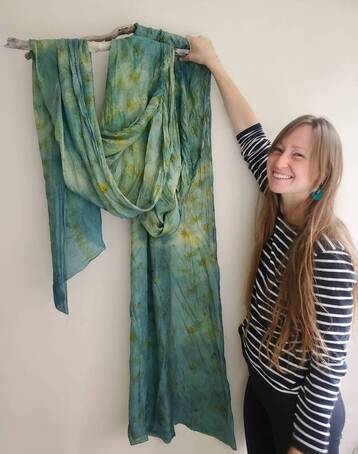
Wearing one of my cyanotype printing silk scarves, made with wet techniques. 
Why I made these courses ~

As artists, when we start to really look at our art materials ~ at what they are made of and how they negatively affect our health and the environment ~ it can feel like going down a murky rabbit hole with no end in sight.

Like many artists, for a long time I was completely unaware that most of our synthetic pigments are fossil fuel based and really not great for the environment or our health. Once I found out, it was completely overwhelming and difficult to know where to start. After much trial and error, and learning with many amazing experts and teachers, I began to settle into my environmentally reverent creative practice. 

For the past 11 years now I have taught fine art, sustainable textiles, nature connection and eco art, all intertwined with a focus on wellbeing. And for the last 6 years I have been teaching skills to empower artists and creatives to create freely with environmentally conscious processes. 


Who This Is For~
• Beginners and experienced creatives and artists
• Artists wanting to introduce natural colour to cyanotype printing
• Creatives and artists interested in environmentally conscious practices
• Anyone curious about alternative photography, plants, textures, and natural dyes


I’m so excited to welcome you into this creative, joy-filled space—come discover the magic of cyanotype and natural dyes with me!
Picture