Ashleigh Ellis Natural Dye & Eco Art
  • Home
  • Gallery
    • Into The Leaves Exhibition 2022
    • Cyanotypes
  • Blog
    • Solar Dyeing: A Simple Natural Dyeing Method
    • Basic Natural Dye Recipie
    • How to Grow Woad: The Blue Natural Dye Plant
    • Logwood/Ek - Uncovering a True Name
    • Yellow Flag Iris Ink & a View of Elwith
  • Contact
  • About
  • Thinking with Maple Fine Art Print Large
  • Online Course: Natural Dyes & Cyanotype
  • Home
  • Gallery
    • Into The Leaves Exhibition 2022
    • Cyanotypes
  • Blog
    • Solar Dyeing: A Simple Natural Dyeing Method
    • Basic Natural Dye Recipie
    • How to Grow Woad: The Blue Natural Dye Plant
    • Logwood/Ek - Uncovering a True Name
    • Yellow Flag Iris Ink & a View of Elwith
  • Contact
  • About
  • Thinking with Maple Fine Art Print Large
  • Online Course: Natural Dyes & Cyanotype
Search by typing & pressing enter

YOUR CART

3/3/2023 1 Comment

Solar Dyeing ~ A Simple Natural Dyeing Method

Picture

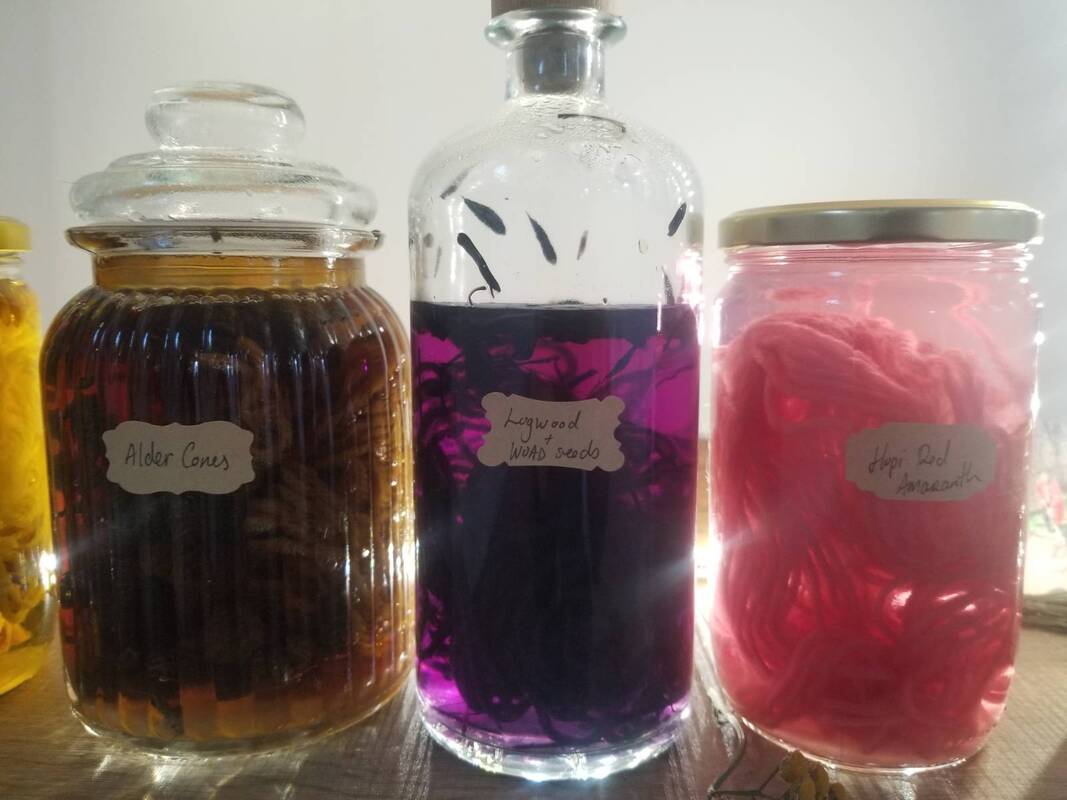
A Jar, plant material, a pinch of Alum, Sun and Time - Solar Dyeing couldn’t be easier!

If you are willing to wait a few weeks and let the natural energy of the sun help create beautiful vibrant effects on yarn or small textile pieces, Solar Dyeing is a gratifying method to experiment with.

Solar dyeing is a magical process that is suitable for small quantities of textiles. It is a sustainable and environmental practice as it is low on water use, and low on energy as you just need to heat the kettle once.

In hot countries, some natural dyeing can be done without any man made heat source, in our colder climates here in Europe, this is not so easy. Solar dyes get around this by using air-tight containers, the sun’s rays, and time. 

It is so magical to see the colour slowly being released from the plant and taken up by the textile - the wonder of chemistry and biology in action in front of your eyes! Naturally, this is a great experiment to do with children. 

Recently I have been enjoying processes which are slow - slowing down your mind and giving space to the joy of what you are experimenting with. Too often I get caught up in the ‘doing’, and can miss the realisation and pleasure of what is actually happening. 

And Solar Dye Jars are so pretty to look at too! I am almost reluctant to open them once the time has come…

Picture
Picture
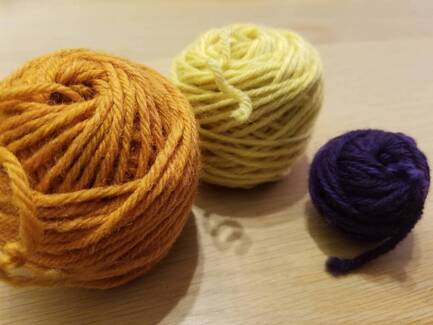
I found Yarrow Cloth of Gold a really beautiful plant to work with using this method. It looked like a glistening jewel in the jar, and gave the yarn a wonderful zingy scent afterwards. It seemed to really enjoy being treated in this way. I wonder what your favourite plant to solar dye with will be?


Materials:

Fibre  - Pre-washed 100% natural protein fibre textile (wool yarn, silk fabric.)
Alum - Aluminium Potassium Sulphate ( often found in Asian food shops, can buy online from https://appleoakfibreworks.com/ )
Water - rain water is best, but not necessary
Jar with lid - sterilised 
Plant Material - Some plants to get you started; Marigolds, Dyer’s Camomile, Hawthorn, Alder cones, dark Dahlia’s, dark Hollyhocks, Purple Bearded Iris…

*This recipe uses alum which is a metallic salt that occurs in nature, and is non-toxic. Small quantities are used in some traditional cooking. However you still do not want to inhale the vapour, and it is not advised ingesting any quantity of it. It forms a chemical bond with natural dyes, allowing them to adhere to the fibre. It works in combination with protein fibres. I will be writing more in a future blog about the different types of fibres and how they respond differently to methods of dyeing and what is needed to prep textiles for natural dyeing. 


Method:

Gather and prepare all your materials:

  1. Sterilise your jar and lid by boiling it for 10 mins, or in the oven for 8 mins on 180 degrees.
  2. Pick your flowers/plant material fresh, or use what you have dried and saved. (If you’ll be doing this, it can be good to rehydrate your plant material a few hours before using cool water.
  3. Measure out ½ - 1 Tsp of alum (depending on the size of your jar). 
  4. Dissolve the alum with a bit of hot water before pouring into the jar. Use a mask for this part to avoid inhaling the steam. 
  5. Add your plant material to the jar, and top up with cool water.
  6. Seal with an airtight lid, and gentle shake. 
  7. Leave your jar in a warm sunny place. I like to use a sunny window above a radiator. 
  8. Leave for approx. 6x weeks (less in summer, more in winter). 

Picture
Picture
Tips:

  • Make sure your lid can be air tight - (No stabbed lids - like my other half does to do to the pickle jars to open them. These will mould, and you need to wait a long time, so a good thing to avoid!)

  • Make sure you use protein fibres to dye with- other fibres will either not take the dye with this method, and will not be wash-fast and light-fast. Protein fibres are fibres created by an animal, so wool or silk fall into this category. If you prefer to avoid animal products,  you will need to treat your textiles with a tannin first. Alternatively there is an easy cheat way to make cotton more attractive to natural dyes with soya milk, and I’ll write about both these preparatory methods in blog posts soon. 

  • If it is a warm place it will work quicker.

  • Make sure most of the dye has been soaked up by the fibre before you dispose of the liquid, unless you want a lighter shade. If that’s the case, the liquid could continue to be used by a new fibre to prevent waste. 

  • Some people like to gently shake their jars for even colour, others like to pack the jar for a variegated effect. 

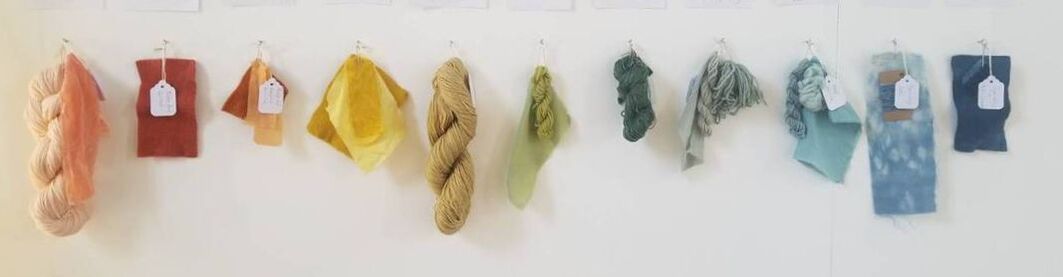
  • Repeat solar dyeing on the same textile can create new colour palettes…

Picture


I’d love to see your experiments! Tag me if posting on Instagram with @ashleighellis_natureartist

Happy Dyeing My Friends!
Picture

    If you'd like to join me on a journey exploring beautiful botanical colours for textiles and paper ~ I'd love to invite you to my newsletter where I send weekly inspiration, tips and know-how, all around developing an ecologically friendly creative practice. Unsubscribe at any time.

Subscribe to Newsletter
1 Comment
Attic Bear
3/7/2023 04:57:19 am

Ashleigh. So helpful - thank you 🤗
Off now to an Asian shop & definitely will be investigating appleoakfibreworks.com. Looking forward to future blogs. All the best

Reply

Your comment will be posted after it is approved.


Leave a Reply.

    Picture
    Ashleigh Ellis is an eco social artist who has a natural dye practice. She teaches skills and know-how, and grows natural dye plants with communities, benefiting people, place, and pollinators.


The Magic of Natural Dyes and Cyanotype Printing

~ an Online Course


Welcome to the beautiful world of Cyanotype printmaking on paper and fabric combined with plant pigments.  This course will share the steps, recipes, and techniques you need to confidently create unique and colourful works of art in an environmentally conscious way.  You will learn how to combine foraged and found plants and pigments with the simple and low impact photographic process of cyanotype and come away bursting with ideas for your creative practice.

There is a world of natural colour at your fingertips waiting to be discovered!

Upcoming Course starting May 2026 and September 2026!


What Is Cyanotype Printing?
  • Cyanotype is an elemental process of printing an image on paper and fabric. It works with the energy of the sun, water, an object or photographic negative, and UV sensitive iron salts to create stunning blue prints.
  • Cyanotype printing is the most environmentally friendly way of creating a long lasting analogue photographic image, and no camera or darkroom is needed.
  • Photographic negatives, natural forms, objects and textures can be printed onto a huge range of surfaces, making it a highly versatile and creative medium.


Because of the nature of its chemistry, cyanotype combines beautifully with natural dyes - as if they were made for each other! The colours available from adding plant pigments are almost limitless.  Not every plant has been worked with to date, so it is really exciting to see what we will discover in this emerging medium.


A love affair has begun...

This course on cyanotype photography and plant pigments will give you the skills, resources, and support, to enhance the quality and authenticity of your environmentally conscious arts practice.

Picture
As artists, when we start to really look at our art materials ~ at what they are made of and how they negatively affect our health and the environment ~ it can feel like going down a murky rabbit hole with no end in sight.

Like many artists, for a long time I was completely unaware that most of our synthetic pigments are fossil fuel based and really not great for the environment or our health. Once I found out, it was completely overwhelming and difficult to know where to start.

For the past 11 years I have taught fine art, sustainable textiles, nature connection and eco art, all intertwined with a focus on wellbeing. And for the last 6 years I have been teaching skills to empower artists and creatives to create freely with environmentally conscious processes,
such as natural dyeing and botanical inks.

Picture

It is with great excitement that I invite You to join me for the online course The Magic of Natural Dyes and Cyanotype Printing  where I will share with you all I know about plant pigments and cyanotype printing on paper and fabric!


The Magic of Natural Dyes & Cyanotype Printing
~ an Online Course
This course is hosted by The Natural Dyers and Growers Academy and will run in September 2026. 

Included are 5x Live Zoom support sessions. All Live Zooms are recorded and sent to students.
Modules are opened a week before the live sessions.
Students have access to digital materials for a month after, and all materials can be downloaded for life long learning.


Picture

👉 If you love to play with plants, colours and textures, and are interested in combining photographic imagery with natural dyes on paper and fabric, this course is made for you!

🌞Included in the course will be 5x Live Zoom Sessions with me to support you each step of the way, and a group of fellow creatives to share ideas and learn with. 

🧩The platform also hosts a number of extra bonuses to make sure you get as much out of the course as possible.


Picture
This course is for you if you:

 
  • want to avoid toxic art materials and pigments that harm the earth and health through their use and/or disposal. 
 
  • want to know how to create a long lasting photographic images on paper and fabric without costing the earth with harmful chemicals
 
  • want to bring natural pigments into your arts practice but feel overwhelmed and dont know where to start
 
  • want to bring your photography into the world of textiles but don’t know where to start
 
  • want to develop your own photographic prints in an environmentally conscious way
 
  • want to bring photographic imagery into your textile practice in an environmentally conscious way

Picture

FAQ

  • Do I need access to a printing studio, professional textile equipment, or a dark room? - No. There will be a list of easily accessible materials and equipment you will receive when you join the course.  The other essentials are: access to direct sunlight, and a room with curtains to block direct sunlight. 
 
  • Do I have to be a photographer already to take this course? - No! You will need to be able to take photos on your phone, to download an app, and have access to a inkjet printer. 
 
  • Do I have to know textiles or natural dye already to take this course? - No! If you do, then it will add an element to your learning and enrich your current practice. But if you are new to this that is a.ok.! This course will introduce you to the basics of making plant inks, and dyeing paper and fabric with the combination of cyanotype and natural dyes.